Best Apps for Polyamorous Relationships in 2026 (Not Just Dating Apps)
34% of Americans say their ideal relationship is something other than completely monogamous (YouGov, Feb 2023, n=1,000). That’s a third of the country. Yet when you search “best apps for polyamorous relationships,” nearly every list gives you the same answer: dating apps. Feeld, OkCupid, #open. As if finding new people is the only challenge in a poly relationship.
It isn’t. Managing multiple meaningful connections requires more than a matching algorithm. It needs good communication tools, scheduling infrastructure, and — something almost no app list mentions — a way to understand your own relationship patterns over time. This post covers the full stack: matching, communication, scheduling, and tracking. If you’re building a sustainable poly life in 2026, these are the tools worth knowing about.
Key Takeaways
- 34% of Americans describe their ideal relationship as non-monogamous or partly so (YouGov, 2023) — but most app guides only cover dating/matching.
- Feeld has 2M+ members and grew 368% between 2021 and 2025 (Global Dating Insights, 2025).
- 70% of ENM daters on apps are exploring individually, not as a couple unit (Feeld).
- The most overlooked layer of the poly tech stack is relationship tracking — understanding your own patterns across multiple connections.
Why Most “Best Poly App” Lists Miss the Point
71% of respondents in the OPEN 2025 Community Survey (n=5,885 across 65 countries) said non-monogamy was “very” or “extremely important” to them — and 66.8% had been practicing it for at least four years (OPEN, Fall 2025). These aren’t curious newcomers. They’re people managing ongoing, complex relationships. And the challenge they face isn’t only finding compatible people. It’s maintaining connections, communicating across different schedules, and keeping track of what’s happening across multiple relationships at once.
Dating apps solve the first 30 seconds of polyamory: meeting someone who’s open to non-monogamy. They don’t address the next six months. This post is about what you need once you’ve matched.
Part 1: Finding Partners — Dating Apps for Poly People
Feeld grew 368% in membership between 2021 and 2025, reaching 2 million members and roughly £48.9M (~$65M USD) in annual revenue in 2024 (Global Dating Insights, 2025). It’s the largest dedicated ENM dating app. But it’s not the only option — and depending on your specific relationship style and location, one of the others might be a better fit.
Feeld — The Largest ENM Dating App
Feeld is purpose-built for ENM, polyamory, kink, and open relationship exploration. Its “Constellations” feature lets you link your profile with up to five partners, making your existing connections visible to potential matches. You can filter for relationship type, orientation, and the kind of connection you’re looking for. Feeld’s State of Dating research found that 50% of its members have practiced relationship anarchy without knowing it, and that RA practitioners are 50% more likely to say a diverse relationship network combats loneliness (Feeld, June 2025).
Feeld is strongest in urban markets and among 35-44 year olds, who represent 38.2% of polyamorous dating app users — the largest age segment (Global Dating Insights, 2025).
#open — Privacy-First ENM Community
#open (pronounced “hashtag open”) is self-funded and designed around a privacy-first philosophy. Profiles use hashtags (#poly, #kink, #queer, #dates) rather than algorithm-driven matching. It has 320,000+ community profiles. Unlike most dating apps, #open integrates in-person event ticketing and private club access — it’s a social layer as much as a matching tool. Its co-founders built it specifically to avoid the data-sale business model common to VC-backed apps.
OkCupid — The Mainstream Option With ENM Support
OkCupid was one of the first mainstream dating apps to add formal ENM relationship type options. You can mark yourself as ethically non-monogamous and filter for others who’ve done the same. It doesn’t allow joint couple profiles — solo profiles only. Mentions of non-monogamy on OkCupid increased 45% between 2021 and 2023 (OkCupid). The tradeoff: it’s a general dating app, not a specialized one. The depth of ENM community is smaller than Feeld’s.

Part 2: Staying Connected — Communication Apps
70% of ENM daters on apps are exploring as individuals, not as couple units (Feeld). That means most poly people are managing their own networks of connections independently. The communication challenge is real: different relationships have different rhythms, and the people involved often have very different schedules and communication styles.
Marco Polo — Asynchronous Video Messaging
Marco Polo is a video messaging app designed specifically for asynchronous communication — you record a video when you have time, the other person watches and responds when they have time. For poly relationships that span different time zones, shifts, or parenting schedules, this removes the pressure to be available simultaneously. You can create group threads for polycule-wide communication. It’s lower-stakes than a live video call and more personal than a text thread.
The app is free. The “Plus” tier removes ads and adds some features. It doesn’t position itself as a poly app — but the poly community has consistently recommended it for managing relationship communication across different schedules.
Part 3: Managing Time — Scheduling Apps
54% of OPEN 2025 respondents said “fear of stigma or discrimination” was a major or moderate source of stress (OPEN, Fall 2025). But scheduling — the unglamorous logistics of maintaining multiple relationships — is a close second in the practical frustrations people report. When you’re managing a partner’s schedule, your own work life, a metamour’s calendar, and a new connection who only has Thursday evenings free, you need infrastructure.
Google Calendar — Shared Calendars Per Relationship
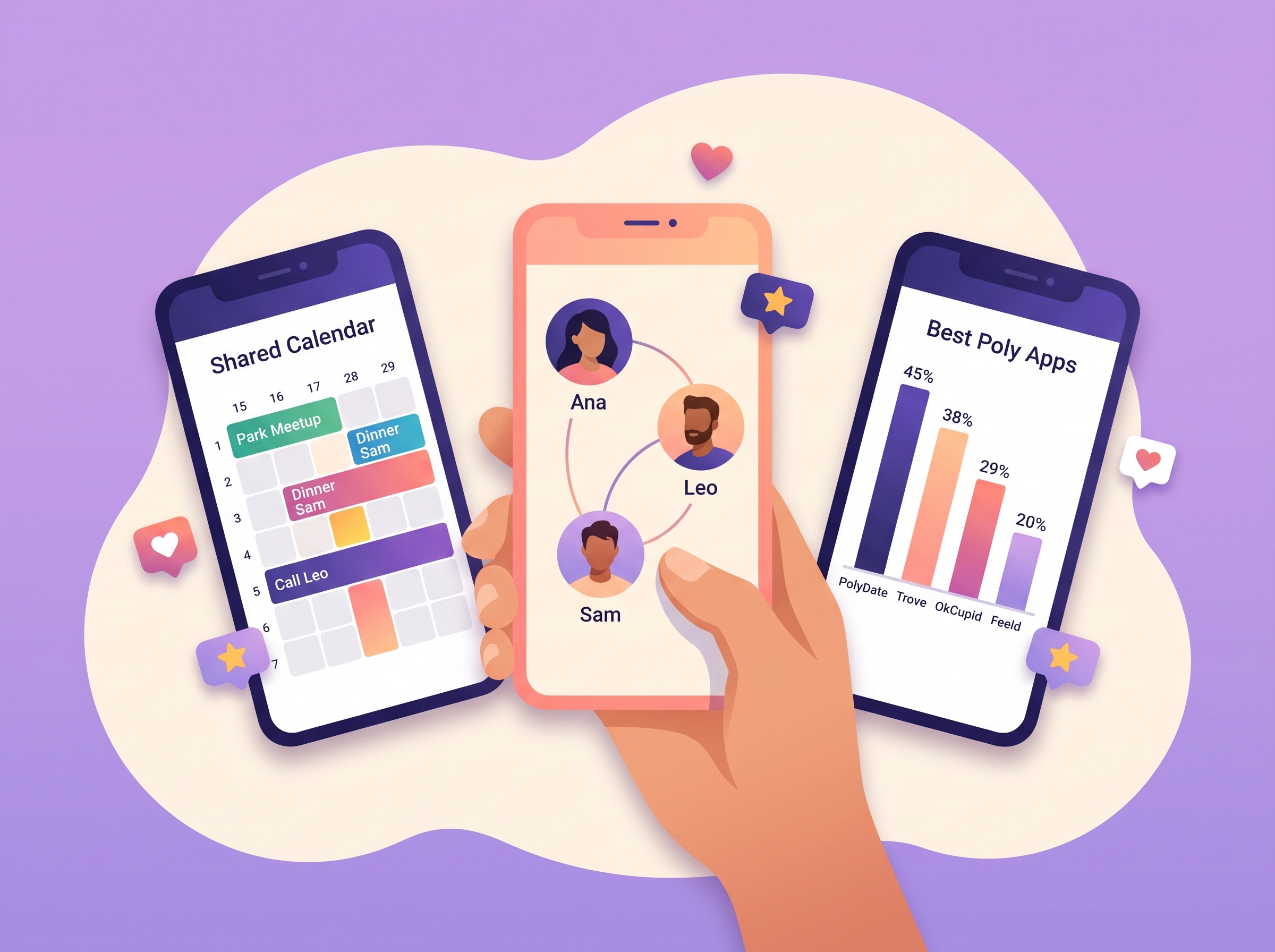
Google Calendar is the most widely recommended scheduling tool in poly communities, and for good reason: it’s free, widely understood, and you can create separate color-coded calendars per relationship or partner. Share just the availability you want to share with each person. The limitation is that it isn’t privacy-partitioned — anyone you share a calendar with can see everything on it. Set up separate calendars for different relationships rather than one shared poly-wide calendar.
PYE — Purpose-Built for Polyamory Scheduling
PYE is the first calendar app built specifically for polyamorous relationships. It includes multi-partner availability views, consent coordination tools, per-partner privacy controls, and boundary-setting features. If Google Calendar’s lack of relationship-specific structure bothers you, PYE was designed to solve exactly that. It’s newer and has a smaller user base than Google Calendar, but it addresses the specific scheduling friction points that generic tools create for poly relationships.

Part 4: Tracking and Understanding Your Relationships
This is the layer no other poly app guide covers. Matching apps help you meet people. Communication apps help you stay in touch. Scheduling apps help you find time. But none of them help you understand what’s actually happening across your relationships over time — the patterns in how connections develop, where friction tends to appear, what kinds of dynamics tend to repeat, what your own emotional patterns look like across different partners.
That gap is a significant one for people managing several ongoing relationships simultaneously. A general journal can preserve memories. A notes app can hold scattered thoughts. Neither gives you structured data about relationship events, timelines, emotional context, or recurring patterns.
DaterGraph — Relationship Tracking and Analytics
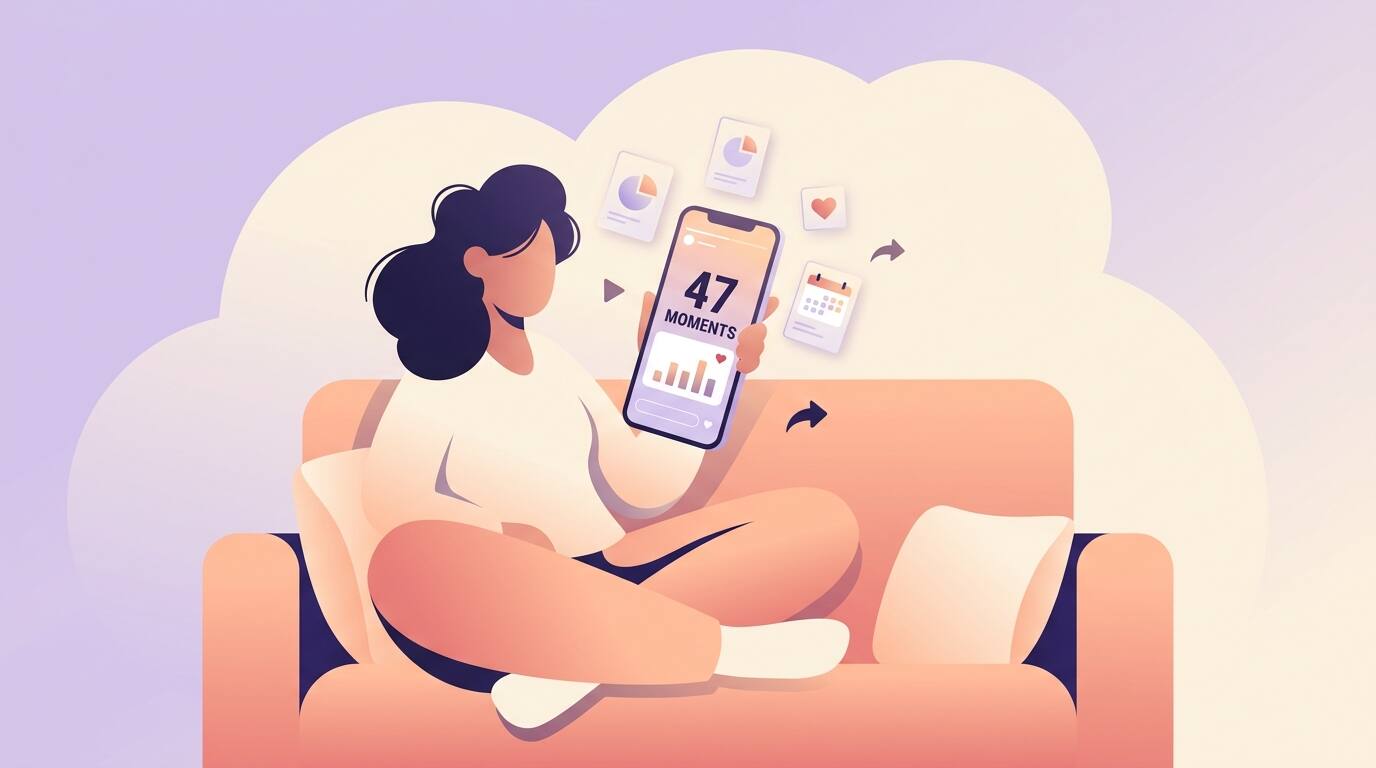
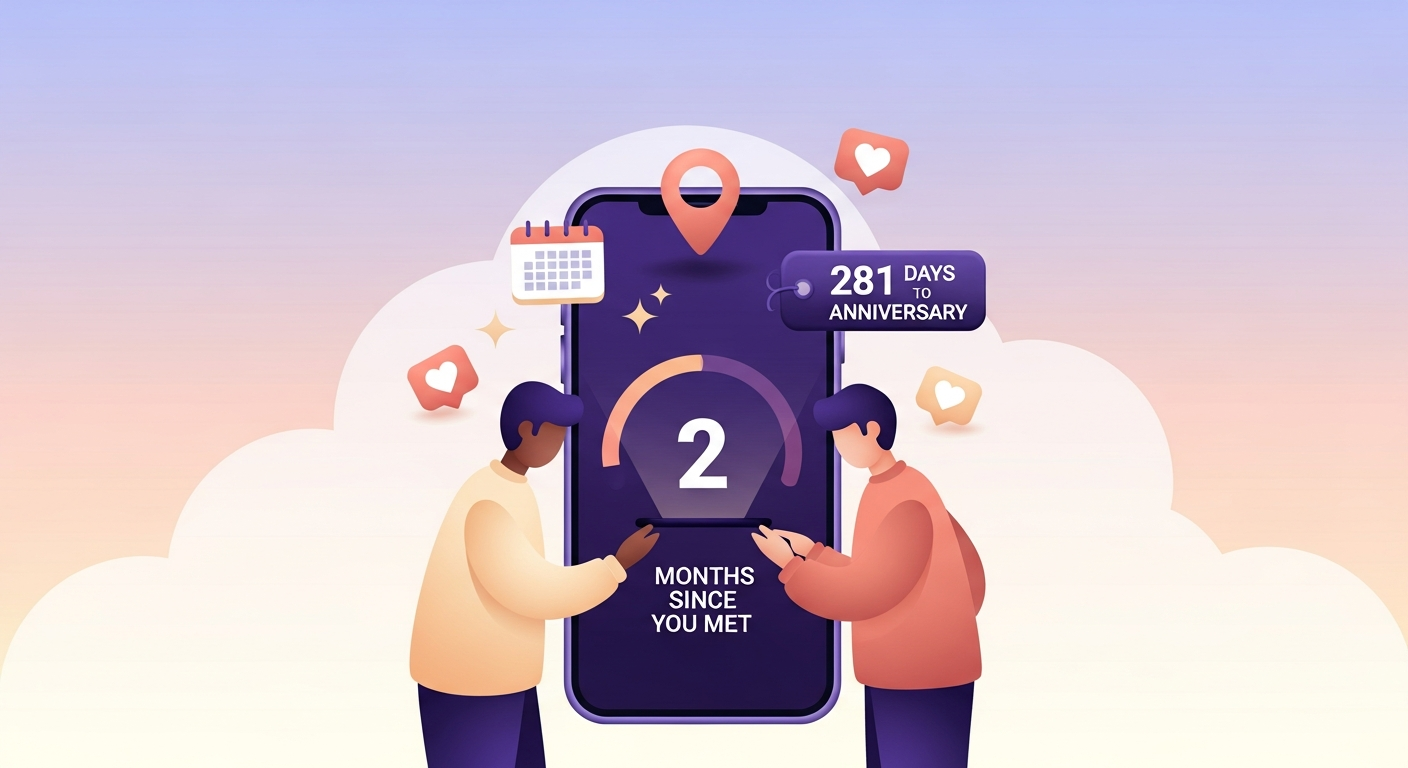
DaterGraph is a relationship tracker built to log dating events, conversations, emotions, and relationship milestones across multiple connections. It’s designed for exactly the use case that poly people face: multiple relationships, each with their own timeline, their own emotional context, and their own patterns that are easy to miss when you’re managing them simultaneously.
Where Feeld helps you find someone, and Marco Polo helps you stay in touch, DaterGraph helps you understand what’s happening. It answers questions like: Which connections are becoming more consistent? Where does friction tend to emerge? What patterns appear in your early-stage relationships? How does your emotional investment compare across different connections?
Entries are protected with Face ID biometric lock, which matters in a poly relationship where your phone is likely near multiple partners. DaterGraph also pulls in community benchmarks — anonymous aggregated data — so you can see how your patterns compare to others. See how DaterGraph works.
Building Your Poly Tech Stack
Not every poly person needs every layer. If you’re just starting out or primarily focused on finding connections, Feeld or OkCupid is where to start. If you’re already in multiple ongoing relationships and feeling the organizational weight, the scheduling and communication layers become more important. The tracking layer is worth considering once you have enough relationship data to make patterns visible.
A practical starting point:
- Matching: Feeld (largest ENM community) or #open (privacy-first, event-integrated)
- Communication: Marco Polo for async video; your existing messaging app for real-time
- Scheduling: Google Calendar with per-partner shared calendars, or PYE if you want poly-specific tools
- Tracking: DaterGraph for logging relationship events and understanding your patterns
Frequently Asked Questions
What is the best dating app for polyamorous people?
Feeld is the largest dedicated ENM dating app, with 2M+ members and 368% growth between 2021 and 2025 (Global Dating Insights, 2025). For urban ENM communities it’s usually the strongest option. #open is the best choice for privacy-focused users or those who value in-person community events alongside digital matching. OkCupid covers smaller markets where Feeld’s user base is thin.
Are there apps specifically for managing polyamorous relationships?
Yes — though the category is emerging. PYE is purpose-built for polyamorous scheduling and consent coordination. DaterGraph is purpose-built for relationship tracking and analytics across multiple connections. These address the organizational challenges of poly life that general apps like Google Calendar and Notes don’t handle well. See how DaterGraph handles relationship tracking.
How do poly people handle scheduling multiple relationships?
Most rely on Google Calendar with separate color-coded shared calendars per partner. A growing segment uses PYE, a scheduling app built specifically for polyamorous relationships with consent coordination features. Calendly is also used for date booking between connections — a neutral booking link avoids the back-and-forth of finding a mutual time. The key is separating partner visibility: not everyone needs to see your full calendar.
Is DaterGraph only for monogamous people?
No. DaterGraph supports tracking multiple simultaneous connections, which makes it well suited for poly and ENM users. The app logs relationship events, emotional context, and patterns across as many connections as you’re managing. The biometric lock (Face ID) keeps your entries private — an important feature when your phone may be around multiple partners. It’s one of the few tools designed to handle the relationship complexity that comes with ethical non-monogamy. Explore DaterGraph.
The Bottom Line
The poly tech stack is four layers: matching, communication, scheduling, and tracking. Most app guides cover only the first one. The apps that actually help you sustain multiple relationships over time are the ones that handle the organizational and reflective work — staying in touch asynchronously, coordinating time, and understanding your own patterns.
With 34% of Americans saying their ideal relationship is at least partly non-monogamous (YouGov, 2023), and ENM communities growing significantly year over year, this isn’t a niche concern. It’s a real use case with a real need for better tooling — and the tools are finally catching up.
Last updated: May 31, 2026. App features and community data based on public sources available as of that date.